Polypropylene Random Copolymer (PP-R)
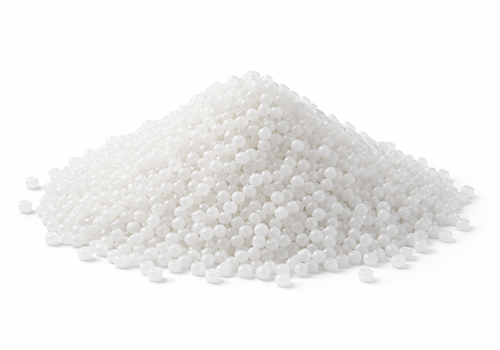
PP Random Copolymer is a type of polypropylene with a small amount of ethylene (usually 1–7%) incorporated into its structure. This makes the material more flexible and impact-resistant than the homopolymer while retaining good transparency and processability.
Key features
- Increased impact resistance
- Improved transparency
- Good weldability
- Stable processing by injection moulding and extrusion
- Higher resistance to cracking
Physical and mechanical properties (typical values) | |
Property | Typical values |
Density | 0.895 – 0.905 g/cm³ |
MFI (230°C / 2.16 kg) | 1.5 – 30 g/10 min (depending on grade) |
Tensile strength | 25 – 32 MPa |
Modulus of elasticity | 900 – 1300 MPa |
Impact strength (Izod) | higher than PP-H |
Melting temperature | 140 – 150 °C |
Vicat softening temperature | 125 – 135 °C |
Values may vary depending on the manufacturer and the specific grade.
Melt flow (MFI)
The melt flow index is chosen according to the processing technology:
- 1–4 g/10 min — pipes, sheet, extrusion
- 5–15 g/10 min — general-purpose injection moulding
- 20–30 g/10 min and above — thin-wall injection moulding
Applications
- Food containers
- Transparent packaging
- Medical products
- Lids and caps
- Household products
- Pipes (PP-R for hot and cold water supply)
- Thin-walled products
Advantages over the homopolymer (PP-H)
- Better impact strength at low temperatures
- Higher transparency
- Lower brittleness
- Improved welding properties
Request form